Movie & TV Screenplays
Browse 2,258 movie and TV screenplays in PDF: Titanic, The Godfather, Pulp Fiction, Oppenheimer and more. Read the original scripts online, download free PDFs, and study Hollywood format, dialogue and structure scene by scene.
-
The Godfather (1972)
Mario Puzo, Francis Ford Coppola · 175 pages
Puzo and Coppola's crime bible. Michael Corleone's corruption arc remains the definitive character-transformation blueprint in screenwriting.
-
Casablanca (1942)
Julius J. Epstein, Philip G. Epstein, Howard Koch · 129 pages
The perfect Golden-Age screenplay — still the first text film schools reach for when teaching structure, backstory release, and wartime stakes.
-
Chinatown (1974)
Robert Towne · 158 pages
Revered by screenwriters as the perfect script — layered revelation and the strict limits of the detective's POV.
-
Pulp Fiction (1994)
Quentin Tarantino · 162 pages
Tarantino's manifesto of circular, non-linear storytelling — three interlocking tales where dialogue itself is the action.
-
Citizen Kane (1941)
Orson Welles, Herman J. Mankiewicz · 164 pages
A reporter's quest to decode a dying magnate's final word reveals the hollow triumph of a life built on power and lost love.
-
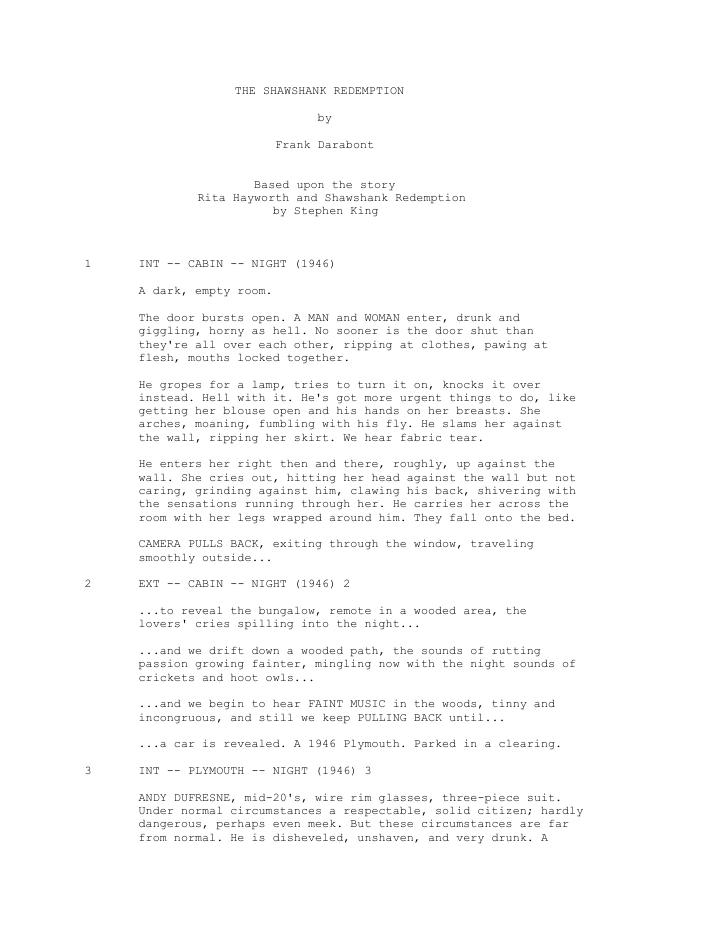
The Shawshank Redemption (1994)
Frank Darabont · 115 pages
Darabont's adaptation of Stephen King. The canonical example of voice-over done right and compressing two decades into two hours.
-
The Godfather Part II (1974)
Francis Ford Coppola, Mario Puzo · 197 pages
Michael Corleone fights to legitimize his empire while Vito's violent rise in early 1900s New York haunts the family's past.
-
Network (1976)
Paddy Chayefsky · 148 pages
Chayefsky's prophetic media satire — how long monologues keep dramatic momentum without becoming a lecture.
-
The Apartment (1960)
Billy Wilder, I.A.L. Diamond · 156 pages
A lowly insurance clerk lets executives use his apartment for affairs to climb the ladder, but must navigate the fallout when he discovers his boss's mistress is the woman he loves.
-
Some Like It Hot (1959)
Billy Wilder, I.A.L. Diamond · 165 pages
Widely hailed as the perfect comedy script — escalating disguise, and dialogue where every line advances plot.
-
Sunset Boulevard (1950)
Charles Brackett, Billy Wilder, D.M. Marshman Jr. · 123 pages
Wilder's noir classic opening with a dead narrator — audacious voice-over and Hollywood dissecting itself.
-
Taxi Driver (1976)
Paul Schrader · 122 pages
Schrader's lonely-man interior monologue — diary voice-over into an unreliable mind, the city itself a character.
-
Annie Hall (1977)
Woody Allen, Marshall Brickman · 135 pages
The fourth-wall-breaking rom-com revolution — nonlinear memory and direct address showing how free comedy structure can be.
-
12 Angry Men (1957)
Reginald Rose · 119 pages
A single-room jury drama — how a confined space forces maximum tension and twelve men gain dimension through dialogue alone.
-
All About Eve (1950)
Joseph L. Mankiewicz · 181 pages
A cunning young fan insinuates herself into a star actress's life, plotting to seize her Broadway career and everything she holds dear.
-
The Social Network (2010)
Aaron Sorkin · 162 pages
Sorkin's rapid-fire dialogue tour de force — dual deposition frames and machine-gun lines defining modern dialogue-driven storytelling.
-
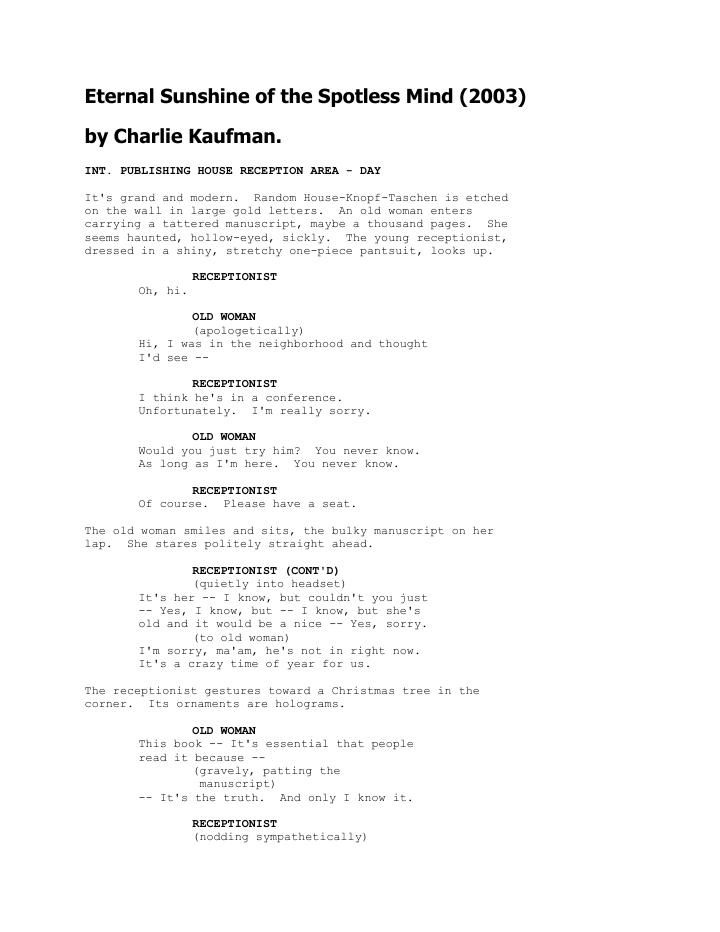
Eternal Sunshine of the Spotless Mind (2004)
Charlie Kaufman · 113 pages
Kaufman's memory-erasure experiment — reverse storytelling inside fading memories, high concept in service of pure feeling.
-
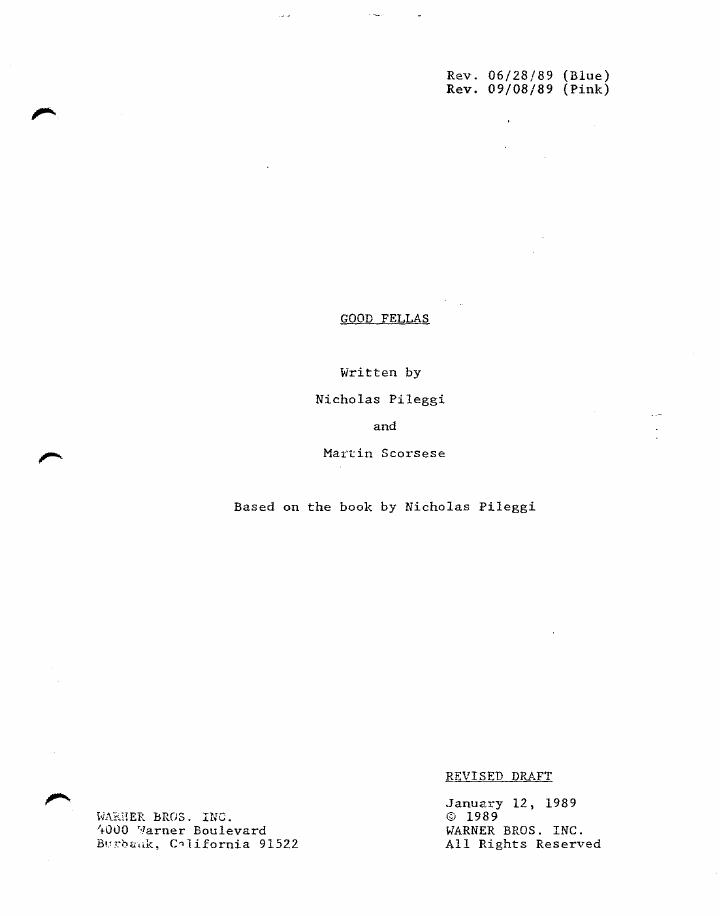
Goodfellas (1990)
Nicholas Pileggi, Martin Scorsese · 127 pages
Scorsese's mob life epic — first-person narration compressing thirty years and the economics of an ensemble sketch.
-
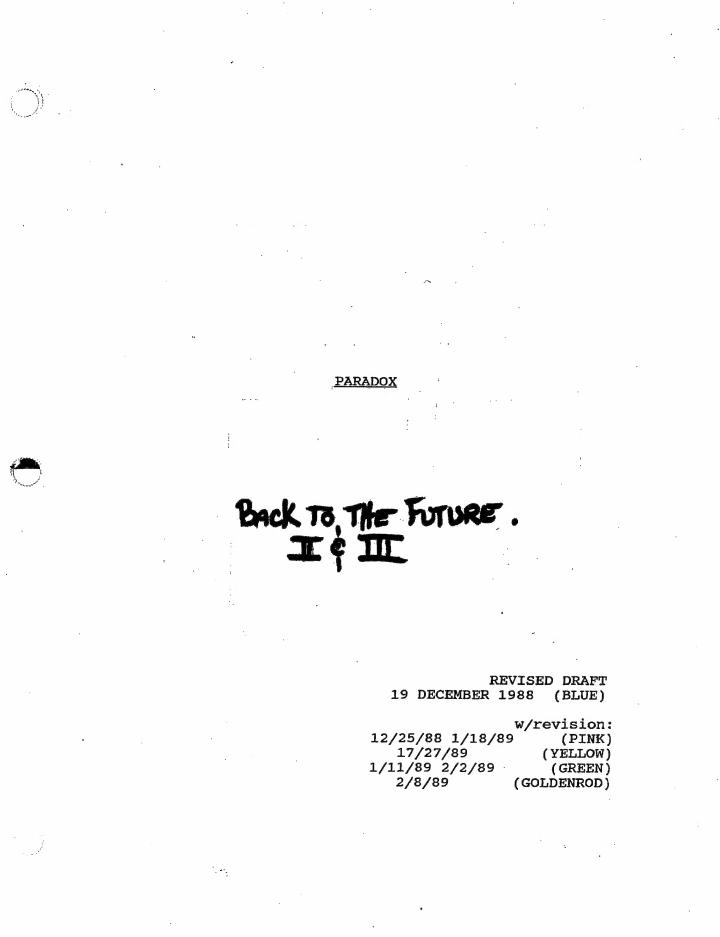
Back to the Future (1985)
Robert Zemeckis, Bob Gale · 164 pages
The most precisely engineered time-travel script — every setup pays off in a watertight causal loop.
-
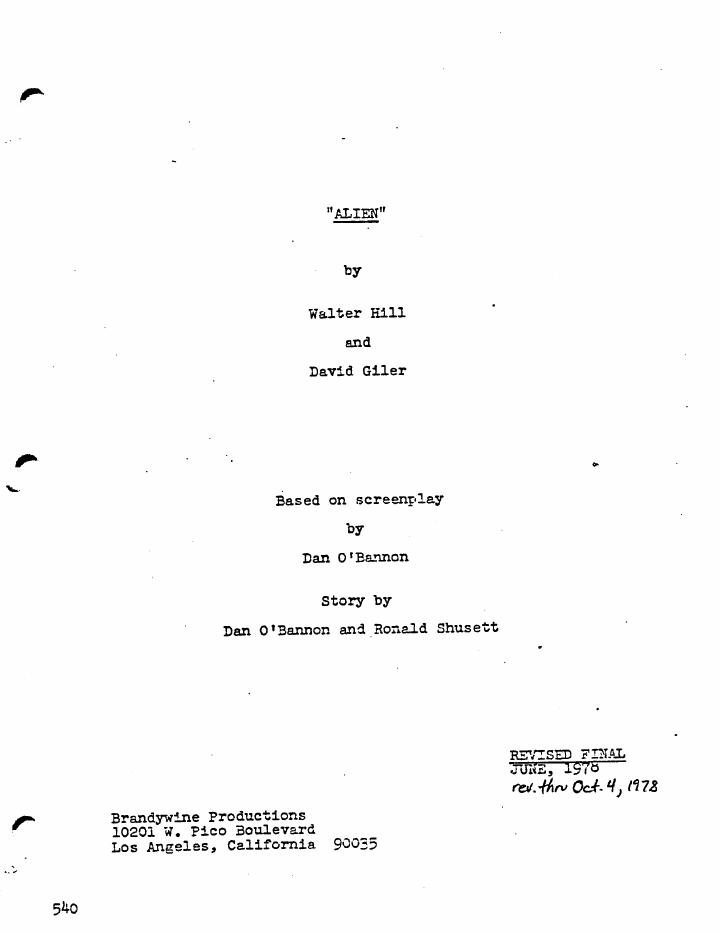
Alien (1979)
Dan O'Bannon · 112 pages
The "haunted house in space" high-concept minimalism — pacing claustrophobic dread and the economics of picking off a cast.
-
Blade Runner (1982)
Hampton Fancher, David Peoples · 104 pages
The cyberpunk foundation — mood-before-plot worldbuilding and the "what is human" theme inside a detective skeleton.
-
Apocalypse Now (1979)
John Milius, Francis Ford Coppola · 133 pages
Heart of Darkness transplanted to Vietnam — how a river-journey structure carries thematic escalation.
-
Jaws (1975)
Peter Benchley, Carl Gottlieb · 110 pages
The summer-blockbuster template — suspense economics of the unseen threat and a claustrophobic three-man third act.
-
Se7en (1995)
Andrew Kevin Walker · 151 pages
Walker's neo-noir thriller — the seven-sins structure as narrative engine, and how the famous ending forces the theme.